No new platform to learn, no integration to install. Every giving page comes with a giving.at short link and a print-ready QR code — and those travel anywhere your church's life already happens: the community group, the link in bio, the bulletin, the sermon clip, the ad. This is the playbook.
The honest version
We don't claim a WhatsApp integration — you don't need one. What makes social giving work isn't a connector; it's what's behind the link: a mobile-first giving page where a first gift takes under a minute, no account required. Put that link where your congregation already talks, and generosity follows the conversation.
Play one · The community group
Most churches already have a WhatsApp or Facebook community where the real week-to-week life happens. Share the giving page's short link there with the week's initiative — the roof repair, the missions trip, the benevolence fund — and the page's preview card does the rest. A member is two taps from the conversation to the gift.
Friends — this week we're finishing the youth-wing roof before the spring rains. If you'd like to help, here's the link: giving.at/grace-roof
Given — so glad we're finishing this one. 🙌
The short link unfurls into a preview with live initiative progress
One link in the bio — always pointing home
Play two · Link in bio
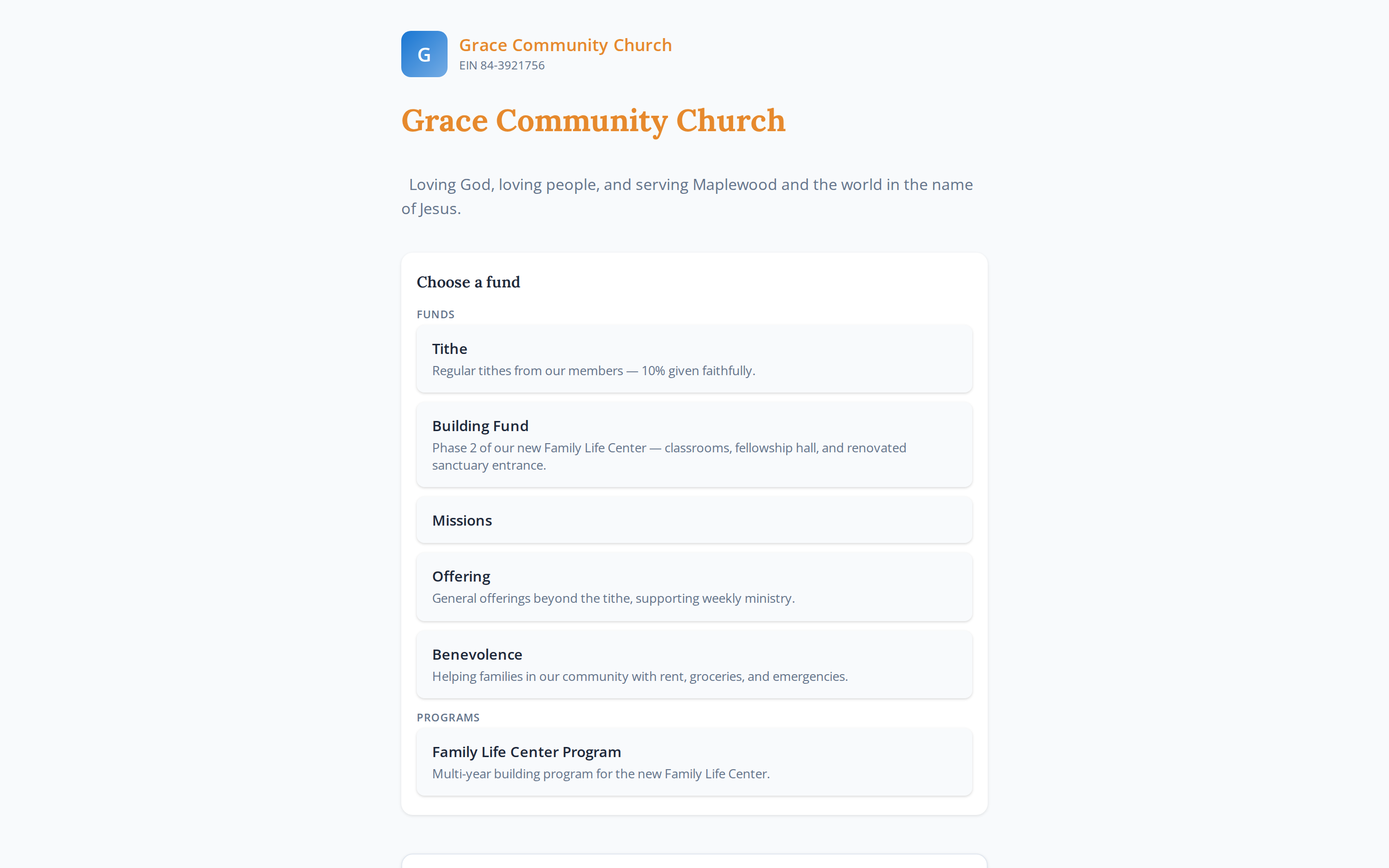
Instagram, Facebook, YouTube — every profile gets one link, and most churches spend it on a homepage nobody can give through. Make it your giving page instead. Set giving.at/grace in the bio once, and the page behind it carries your evergreen funds — tithe, missions, benevolence — alongside the current initiative and its live progress.
Play three · Print
Print is still the channel your whole congregation holds in their hands every Sunday. Every giving page ships with a print-ready QR code — put it in the bulletin footer, on the lobby poster, on pew cards, and on the slide during the offering. The member who never opens the church email scans the bulletin in the pew.
The bulletin footer — the analog bridge to digital giving
Every clip carries the link — in the caption, the pinned comment, or an end-card QR
Play four · Sermon clips & posts
The 60-second sermon clip is how churches reach beyond the building now — and the moment it moves someone is the moment to make a response possible. Put the giving link in the caption, pin it in the comments, or close the clip with the QR on screen. Not every post, and never with pressure: when the content is about generosity, the link belongs there.
Play five · Paid ads
When the building initiative needs to reach beyond the membership — alumni, the neighborhood, the wider community — a modest Meta or Google ad can carry it there. The hard part of ad campaigns is usually the landing page. Yours already exists: an initiative-linked giving page with live progress, gift-ready out of the box, mobile-first for the tap that comes from a feed.
Why it converts
Every play on this page ends at the same place: the giving page. It's built for the person arriving from a chat, a bio, a bulletin, or an ad — on a phone, mid-scroll, with thirty seconds of attention.
The page is built for the phone it will almost always be opened on — fast, legible, one-thumb friendly, with your church's branding throughout.
A first-time giver gives in under a minute, no password and no signup wall. Their My Giving space is created from the gift itself, ready when they return.
When a giver comes back through any link, the page recognizes them — their details ready, their giving one tap shorter. Familiarity is the best conversion tool.
Givers can add the processing fee to their gift at checkout, so the full amount they intend reaches the fund they chose.
Everything on this page is links, QR codes, and giving pages — used well. There's no platform connector that can change its terms or stop working on a Saturday night. And every gift these plays bring in lands in the same fund-separated ledger as Sunday's offering, with receipts and year-end statements handled per giver.