A platform that speaks church
The liturgical calendar, pre-loaded. Denomination-specific vocabulary across every screen. An expert review system for tradition accuracy. Sermon-series-aware giving asks. Built into the architecture — not bolted on.
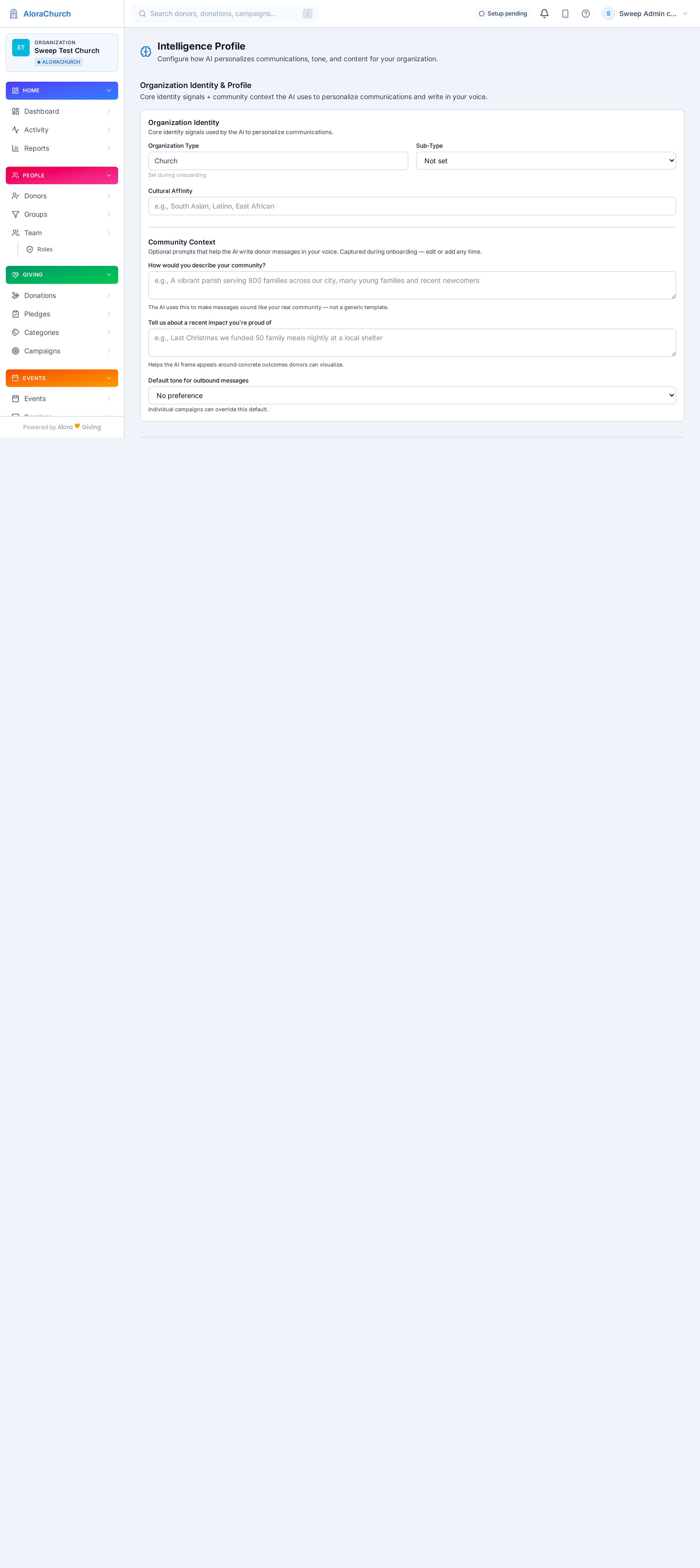
The liturgical calendar, pre-loaded. Denomination-specific vocabulary across every screen. An expert review system for tradition accuracy. Sermon-series-aware giving asks. Built into the architecture — not bolted on.
The problem with generic platforms
A Baptist pastor shouldn't have to translate "donation" to "gift" in her head. A Catholic parish administrator shouldn't have to manually map fiscal-year deadlines onto the Roman liturgical calendar. A Methodist treasurer shouldn't have to explain to a generic CRM what an apportionment is. The platform should already know.
The liturgical calendar — pre-loaded
Advent through Christ the King Sunday, ready from your first sign-in — including the Orthodox/Western Paschal split, computed correctly for either calendar. Calendar-aware automation drafts seasonal initiatives at the right moment for your tradition; your staff approves before anything goes out.
Vocabulary that fits your tradition
Vocabulary is the surface area where bad fit shows. AloraChurch's substitution layer adapts terminology across the navigation, emails, giving pages, receipts, and notifications based on your denomination. And it goes past words: a Catholic parish setup is not a Pentecostal church setup — funds, calendar emphasis, and tone all start in the right place for your tradition.
| Label | Baptist / Nondenom | Catholic | Methodist / Presbyterian | Pentecostal / AME |
|---|---|---|---|---|
| Sidebar | Stewardship | Stewardship | Stewardship | Stewardship |
| Donations | Gifts | Offerings, gifts | Commitments, gifts | Tithes & offerings |
| Donors | Givers, members | Parishioners | Members, friends | Saints, members |
| Categories | Tithe, Missions, Building | Sunday Collection, Parish Capital, Bishop's Appeal | General, Apportionment, Commitment | Tithe, Offering, Pastor's Anniversary |
| Campaign | Initiative | Appeal | Special appeal | Initiative |
| Receipt | Year-end giving statement | Annual contribution letter | Annual giving statement | Year-end giving statement |
Sermon-series-aware messaging
Tell the platform the next few weeks of preaching themes. It drafts a giving ask for each week — a bulletin line, the Sunday email, the post-service follow-up — tied to that week's theme and written in warm stewardship English. Staff approves every word before it goes out.
SME review by ministry experts
Vocabulary, seasonal templates, communication tone — none of this is hardcoded by a software team. Each tradition's content runs through a structured review workflow: credentialed Subject Matter Experts from within that tradition, with real names and scoped review domains. Catholic priests review Catholic copy; Methodist clergy review Methodist copy. And the platform is honest about status — content still awaiting review carries a visible "cultural guidance under review" ribbon until it's approved.
Platform curator or church admin submits a denomination-specific overlay — vocabulary entries, seasonal templates, sermon-tie-in copy.
The platform routes the overlay to an SME whose expertise matches: denomination, region, language. SMEs are vetted, accountable, and named.
SME reads, comments, requests changes, withdraws, or approves. Every decision captured with rationale. Audit-ready trail.
Approved overlay goes live for that denomination in that region. Future churches signing up with that combination get the SME-reviewed content automatically.
Your church can also nominate its own SMEs for tradition-specific review — turning your senior pastor, your bishop, or your denomination's communications office into an authority on what the platform says.
Under the hood
Cultural Intelligence isn't a feature flag. It's an architecture. Four layers, each doing one job, never confusing your data with anyone else's.
Denomination, region, size, history. Built from your signup choices and refined by your actual giving patterns. Stays inside your tenant — never shared with another church.
Giver lifecycle stages, giving cadences, seasonal peaks. Inferred from your data, used only for your data. Drives guided recommendations and at-risk-giver flags.
Initiative copy, sermon-tie-in giving asks, year-end appeal drafts. Anthropic Claude composes drafts tuned to your tradition + your patterns. Staff reviews; AI doesn't autosend.
Coming: k-anonymity-preserving comparisons against similar-size churches in your tradition. "Your average gift vs. the median for similar Baptist churches in the southeastern US." Aggregate only — no individual giver data will ever be exposed.
Your data, your scope
Your giver records are yours. The platform never trains a model on your data. The platform never shares your data with other churches. And when cross-church benchmarks arrive (they're on the roadmap), they will be k-anonymity-preserving aggregates only — your individual giver records are never exposed.
Security & data governance →